
























WHAT HAPPENED?
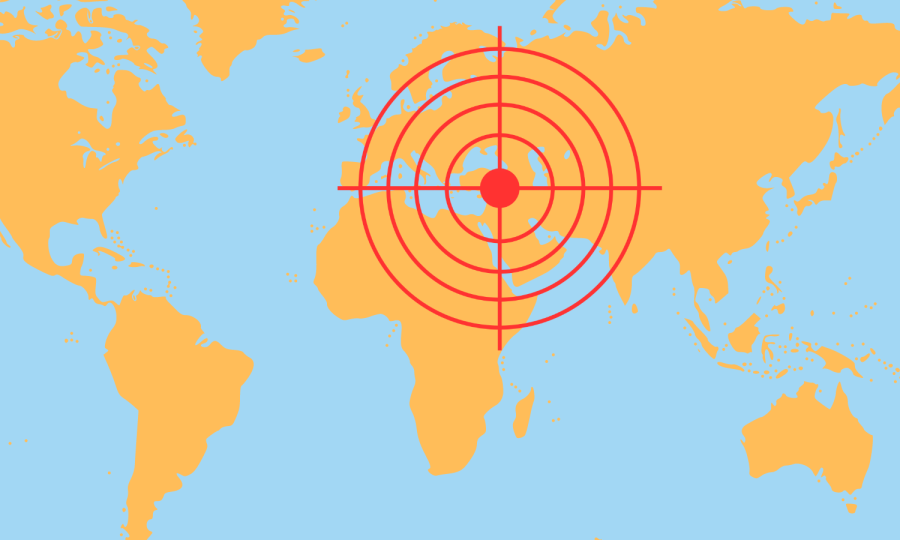
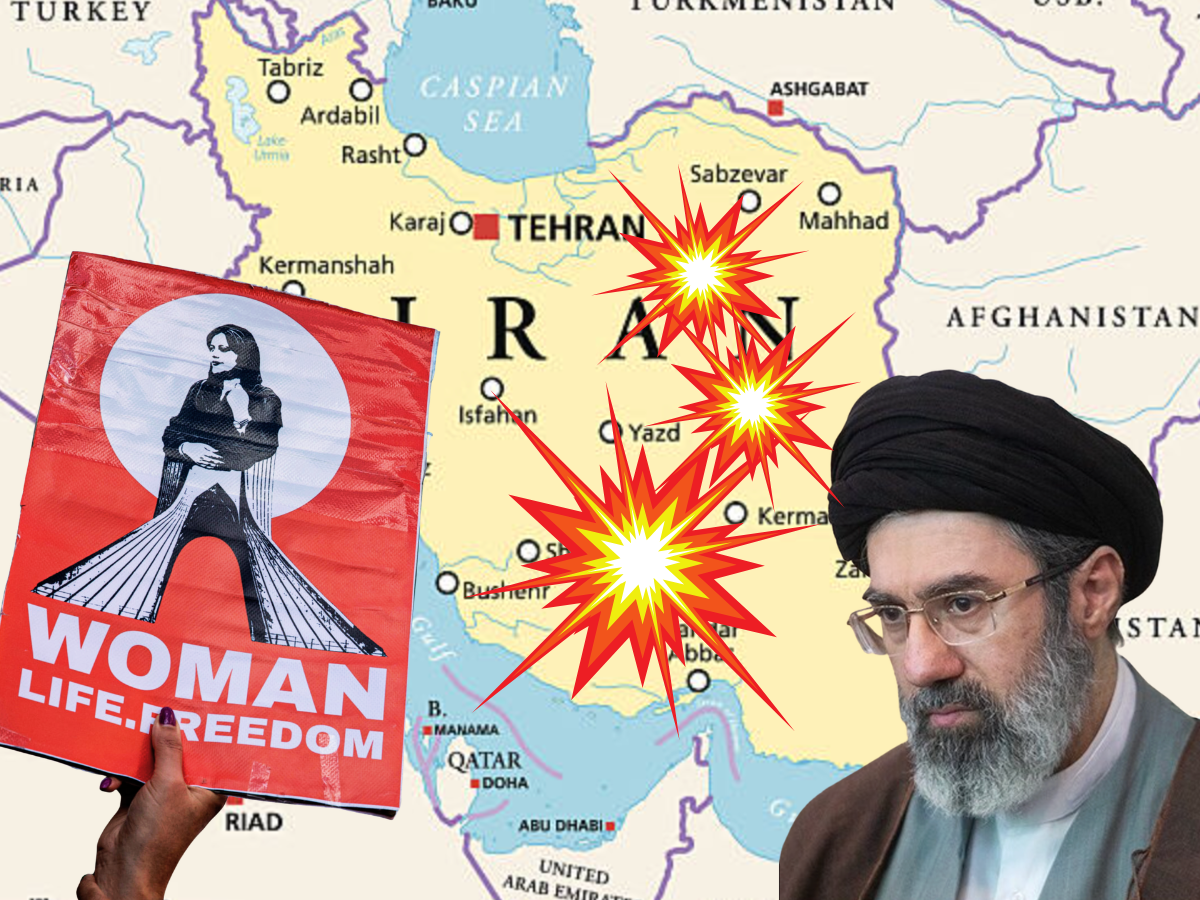
On Saturday, February 28, the United States and Israel launched a massive surprise air campaign against Iran. The strikes targeted military bases, missile facilities, air defenses, and government leadership. Within hours, Iran’s Supreme Leader Ayatollah Ali Khamenei was killed in an airstrike along with numerous other senior leaders. Since the strikes, Iran has announced a new leader, Ayatollah Khamenei’s son Mojtaba Khamenei, who was reportedly in a coma and missing a leg after being wounded in U.S. strikes targeting regime leadership.
In the hours following the strikes, Iran launched waves of missiles and drones toward Israeli territory and toward U.S. bases across the Middle East. American and Israeli airstrikes have continued in the days since, targeting additional missile infrastructure, military installations, and regime facilities across Iran. As of Friday March 13, Iran has been significantly weakened with their navy destroyed, 90% of their ballistic missile capacity reduced, and their top tiers of government dead. The Iranian government has since struck neighboring countries’ US military bases, sent intense barrages of missiles towards Israel, and attacked tankers off the Persian Gulf and Gulf of Oman, effectively closing the Strait of Hormuz.
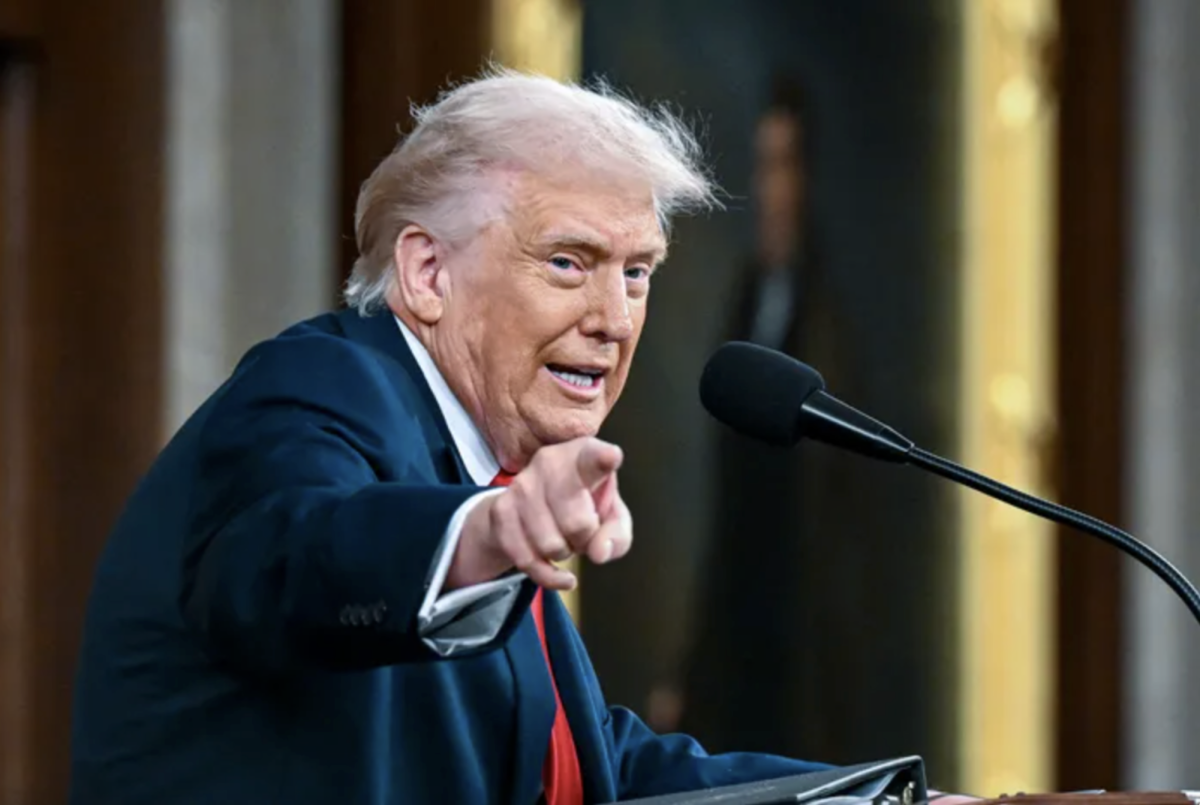
Following the initial strikes, at about 2:30 AM Eastern time, President Trump posted a video on Truth Social. In his address, he outlined the goals of the campaign: eliminating the Iranian nuclear and ballistic missile threat; neutralizing a regime that has sponsored terrorism, committed mass murder and chanted “death to America” for decades; and giving the Iranian people the opportunity to fight for their freedom and take control of their own destiny.
Trump insists that the war is not about regime change. Yet in his speech he directly called on the Iranian people to overthrow their government, presenting the war as a historic opportunity for liberation.
“Finally to the great proud people of Iran, I say tonight that the hour of your freedom is at hand… When we are finished, take over your government, it will be yours to take… America is backing you with overwhelming strength and devastating force.”
The message was a powerful one amid extraordinary unrest inside Iran. In the months before the strikes, millions of Iranians had taken to the streets in protest against the Islamic Republic. The government responded by shutting down the internet, opening fire on crowds, and chasing down protestors to arrest them. Many were executed, and reports circulated of brutal killings meant to intimidate dissenters. Estimates suggest that tens of thousands were executed during the government’s crackdown. Trump had warned at the time that Iran would not get away with “slaughtering protesters,” and he promised the Iranian people that help was on the way. For supporters of the strikes, the February 28 attack appeared to be Trump delivering on his promise.
WHY?
The strikes followed weeks of negotiations between the United States and Iran over the Iranian nuclear program. American officials demanded that Iran abandon its nuclear ambitions and accept international restrictions. Ultimately, those negotiations collapsed after Iran refused to give up its nuclear program. The Trump administration argues that the joint U.S.–Israeli strikes were therefore not reckless aggression, but a necessary act of defense.
The case against Iran, as presented by supporters of the war, is substantial. Since the Iranian regime’s founding in 1979, it has openly defined itself as an enemy of the United States. Its national rallying cry is “Death to America.” Iran has sponsored terrorist groups across the Middle East, including Hezbollah in Lebanon, the Houthis in Yemen, Iraqi Shiite militias, the Assad regime in Syria, and Hamas. These groups have destabilized the region and contributed to the deaths of Americans and American allies.
Iran has pursued nuclear weapons capabilities for decades. Many American presidents have tried varying strategies to stop that effort. President Barack Obama pursued diplomacy through the Joint Comprehensive Plan of Action while President Trump has increasingly emphasized economic pressure and military deterrence. Trump’s strike on the Fordo nuclear site during last year’s Operation Midnight Hammer demonstrated that this administration is willing to use force to halt Iran’s nuclear development.
At the same time, the Iranian regime has oppressed and abused its own citizens for nearly half a decade. Iran is an authoritarian Islamic theocracy in which elections exist but real power lies with the clerical leadership and security institutions. Citizens’ lives are heavily regulated under religious law, and dissent is routinely suppressed. Political commentator Ryan Chapman explored these conditions in a video examining whether foreign intervention could actually benefit the Iranian people. Chapman interviewed dozens of Iranian citizens about their experiences living under the regime. Many described constant surveillance, fear of the Islamic Revolutionary Guard Corps, and brutal repression of protest movements. Women described resisting government restrictions by publicly removing their headscarves, while activists spoke about how the regime uses violence to crush opposition. In his video Chapman shows his text messages with multiple Iranians sharing their story. Many of those interviewed argued that change is desperately needed and that foreign intervention might be necessary to bring it about. The most notable exchange was during his conversation with an Iranian woman who had been refusing to wear her Hijab in her store. She tells Chapman that she has been summoned by a government body regarding her improper dress. She explains that she is scared and unsure if her business will be shut down or if she will hand in some sort of sentence. Chapman asks her if she will continue to go out with a hijab. The woman responds:
“Honestly, it depends on the cost. I need my job and I don’t want to be imprisoned. I’ve heard so many things about girls being raped in prisons. I prefer to die in compare with being raped by this kind of monsters.”
Yet even if the Iranian regime is tyrannical, that does not mean US intervention is justified, nor does it mean the intervention will guarantee a desirable outcome. The decision to go to war has sparked intense debate. Trump campaigned on promises to avoid new foreign wars, and many Americans are surprised to see him engage in a conflict that could easily expand into a much larger regional war. Memories of failed intervention in Iraq, Afghanistan, and Libya are especially prevalent in American uneasiness with the war.
WHAT NEXT?
Broadly speaking, three positions have emerged in the debate. Some critics on the right argue that this war is not what Americans voted for and that the United States should avoid becoming entangled in another Middle Eastern conflict. Critics on the left argue that the war may be illegal and that the president has exceeded his authority launching military operations without preparing the American public and getting congressional approval.
These critics also warn that the consequences of the war could be unpredictable and potentially catastrophic. They argue that destroying the Iranian regime could create a failed state, spark civil war, or trigger a long and costly occupation that the United States cannot easily escape. In NYT interviews with columnists such as Ross Douthat and Ezra Klein, critics such as editor for The American Conservative Curt Mills and former Obama administration official Ben Rhodes argue that the war risks unleashing forces that no one can fully control.
Supporters of the war see the situation very differently. In another interview with Ezra Klein, former Trump national security adviser Nadia Schadlow defended the strikes as a necessary step to prevent Iran from becoming a far greater threat in the future. From this perspective, confronting Iran now may actually prevent a larger and more dangerous war later.
Like most wars, this conflict is already producing global economic consequences. Iran borders the Strait of Hormuz, a narrow waterway through which roughly one-fifth of the world’s oil supply flows. Since the strikes, Iran has attempted to disrupt shipping through the strait by attacking tankers and threatening maritime traffic. Oil prices have surged as global markets react to the instability. Anyone who has visited a gas station recently has likely already felt the effects.
As I write this on Friday, March 13, the war is still unfolding. News organizations are maintaining live coverage as the situation continues to change by the hour. I hope that by the time we return to school next week this conflict will be nearing its end. Looking at the state of things now, however, I am not so certain.