








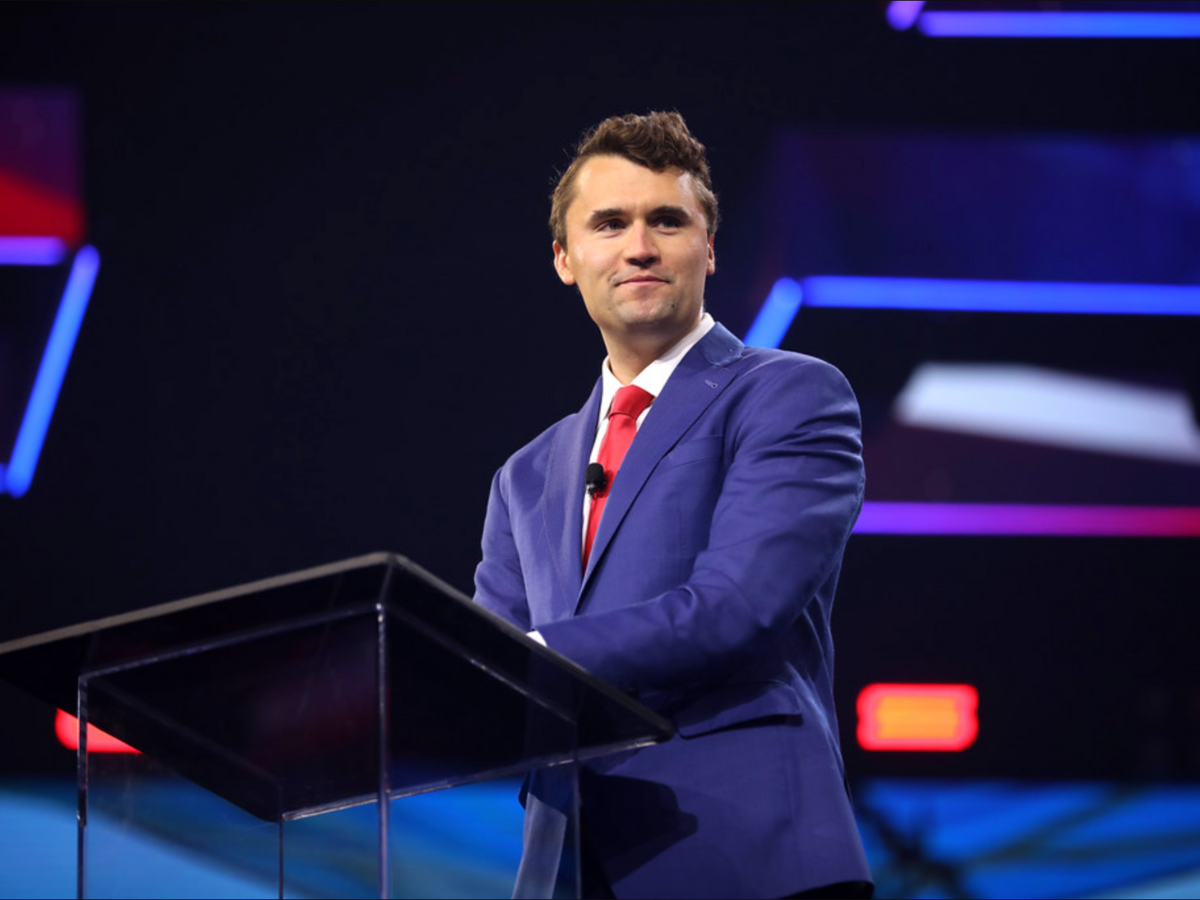









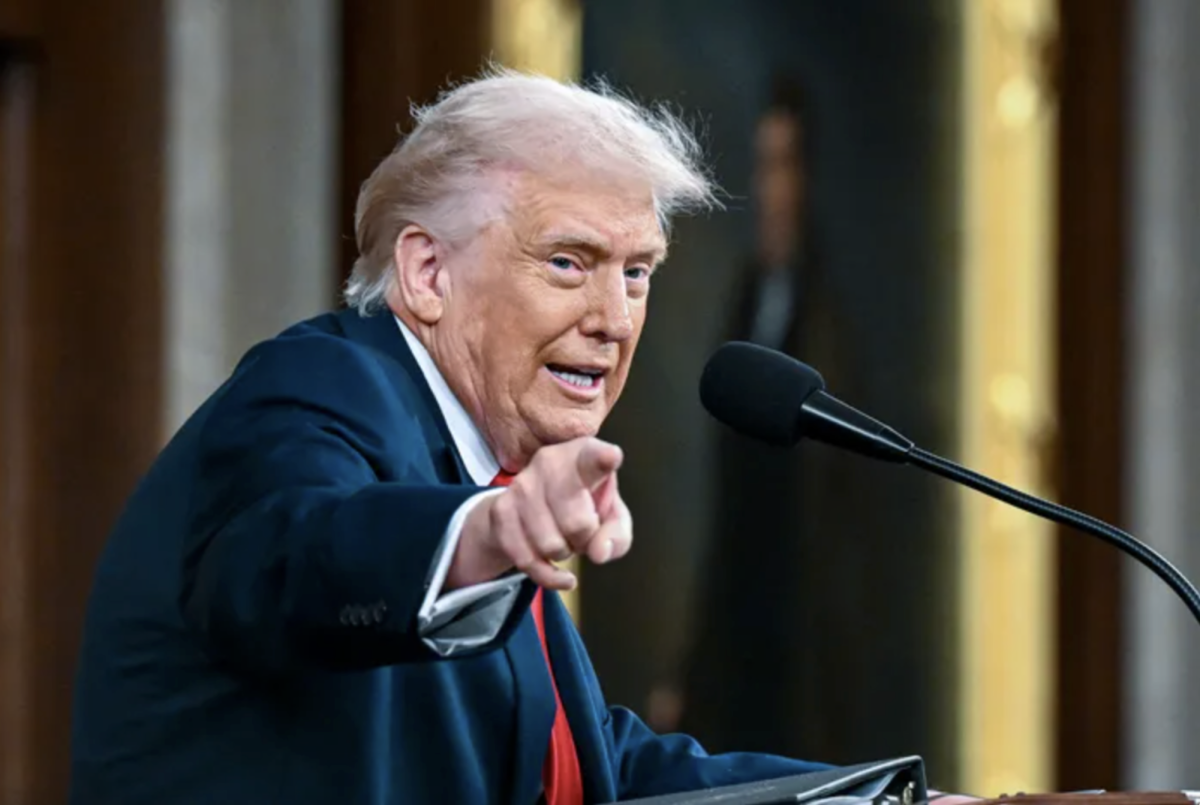
On Tuesday, February 24th, President Donald Trump delivered the longest State of the Union address in modern history. He broke his own record, speaking for 1 hour and 48 minutes, surpassing his previous 1 hour and 39 minute speech.
The length of President Trump’s speech was not surprising. One of the defining characteristics of President Trump is his speaking style. His speeches are long, conversational, and rambling. He moves between prepared remarks and improvisation. He detours to land a joke, or pontificate about the 2020 election. He pauses to jab at opponents. He reacts to the room. For supporters, this signals authenticity. For critics, it feels theatrical and unprofessional. But politically, it is deliberate. Trump’s speeches are not policy recitations. They are performances built for television.
His state of the union address was no different. President Trump spent some time describing and celebrating his policy over the last year, and a lot of the time honoring members of the crowd, making unfortunate remarks (to say the least) about the 2020 election and how he should be in his third term, all while landing in jabs and condemnations of the democrats in and out of the room.
Going into the address, public opinion for Donald Trump has been unfavorable. Only 39% of Americans approve of the way the president is handling the presidency, and that number is only 26% for independents. Only 37% of Americans say the economy is good, while 63% say it is bad. Many Americans oppose his tariff policies. That backdrop could have encouraged a narrower, policy-heavy speech aimed at reassuring the American people that Trump’s policies are improving America. Overall, however, Trump’s speech delivered something broader, and much more combative.
He discussed his policy around immigration, tariffs, economic growth, and foreign policy. But he also spent a significant amount of time engaging directly with the chamber. Early in the evening, Trump recognized the American men’s hockey team that defeated Canada for Olympic gold. The team walked into the chamber to applause, and Trump awarded the American men’s goalie the Presidential Medal of Freedom. It was patriotic, visual, and unifying, the kind of moment designed to play well beyond Washington.
He recognized two veterans with the Medal of Honor. One went to retired Navy Captain Royce Williams, a 100‑year‑old veteran recognized for aerial combat during the Korean War. The second went to Army Chief Warrant Officer Eric Slover, cited for his actions during a recent U.S. military operation to capture Venezuela’s president Nicolás Maduro during a January 2nd raid. He awarded Coast Guard Petty Officer Scott Ruskan a Legion of merritt for his role in large‑scale rescue efforts during devastating Texas floods. Trump also honored Anna Zarutska, the mother of Iryna Zarutska, a 23-year-old Ukrainian refugee who was murdered in North Carolina, by a man Trump claimed never should have been out of jail in the first place.
Interestingly, the applause for those honored was not bipartisan in the way it once might have been. Many Democrats protested throughout the night: through silence, holding up signs, refusal to stand, visible frustration, and occasional shouting. Rather than ignore it, Trump made their protest part of the show. “These people are crazy. I’m telling you, they’re crazy,” Trump said after noting that Democrats were not standing and applauding. “We’re lucky we have a country with people like this. Democrats are destroying our country.” He repeated variations of this theme more than once, openly scolding Democrats for refusing to rise during applause lines. Instead of softening his tone in response to visible division, he leaned into it.
The State of the Union has historically been framed as a unifying moment: a constitutional ritual meant to transcend daily political combat. But modern addresses have increasingly become partisan theater. Trump understands that the chamber is not just a room of lawmakers; it is a stage. The split-screen images of Republicans standing and cheering while Democrats remain seated are not accidental visuals. They reinforce the fierce division of Americans in our politicians.
According to a CBS poll done right before the state of the union, 66% of Americans described the country as divided, and with the image of Democrats refusing to stand and Donald Trump angrily scolding them, it’s no wonder people feel that way. According to post-speech polling, Trump leaning into this division may have worked as a political strategy, at least among viewers. A CNN survey found that Trump’s speech persuaded some who watched it. In a survey conducted prior to the address, 54% of viewers said they believed his policies would move the country in the right direction. After the speech, 64% of the same group said his policies would take the country down the right path. The share who believed Trump had the right priorities increased from 44% before the speech to 54% immediately afterward.
However, the composition of the audience is an important context. The audience was 13 percentage points more Republican than the general population. So, roughly 40% of viewers identified as Republican, compared to about 27% nationally. In other words, the speech did not necessarily persuade skeptics. It energized and solidified those already inclined to support him.
Trump’s political model has rarely depended on universal approval. His approval rating at its highest was still under 50%. He depends not on making people like him but making them hate his opponents. While Donald Trump’s approval ratings seem to be in the gutter, Americans don’t trust the Democrats much either. ABC found that Americans are split on who they trust to handle the country’s main problem: 33% say Trump and 31% say Democrats, and another 31% say neither.His speeches are designed to mobilize loyalists. By directly confronting Democrats in the chamber, he created a narrative for supporters: one side celebrates American victories and law enforcement; the other refuses to applaud.
Critics pointed out the divisiveness of the speech. Late-night host Seth Meyers described the speech as a “vehicle to attack anyone who doesn’t bend the knee.” Democrats argued that Trump used a constitutional address to inflame polarization rather than bridge it.
Was the speech unifying? No. The tension, the callouts, and the partisan applause made that clear. Was it politically effective? Among those who watched, and among those predisposed to agree with him, possibly yes.
However, the open question is what effectiveness ultimately means. Rallying supporters and trying to make the opposing side look bad may win the night. It may even shift short-term polling among viewers. But governing a divided country requires more than energizing one side of the aisle.